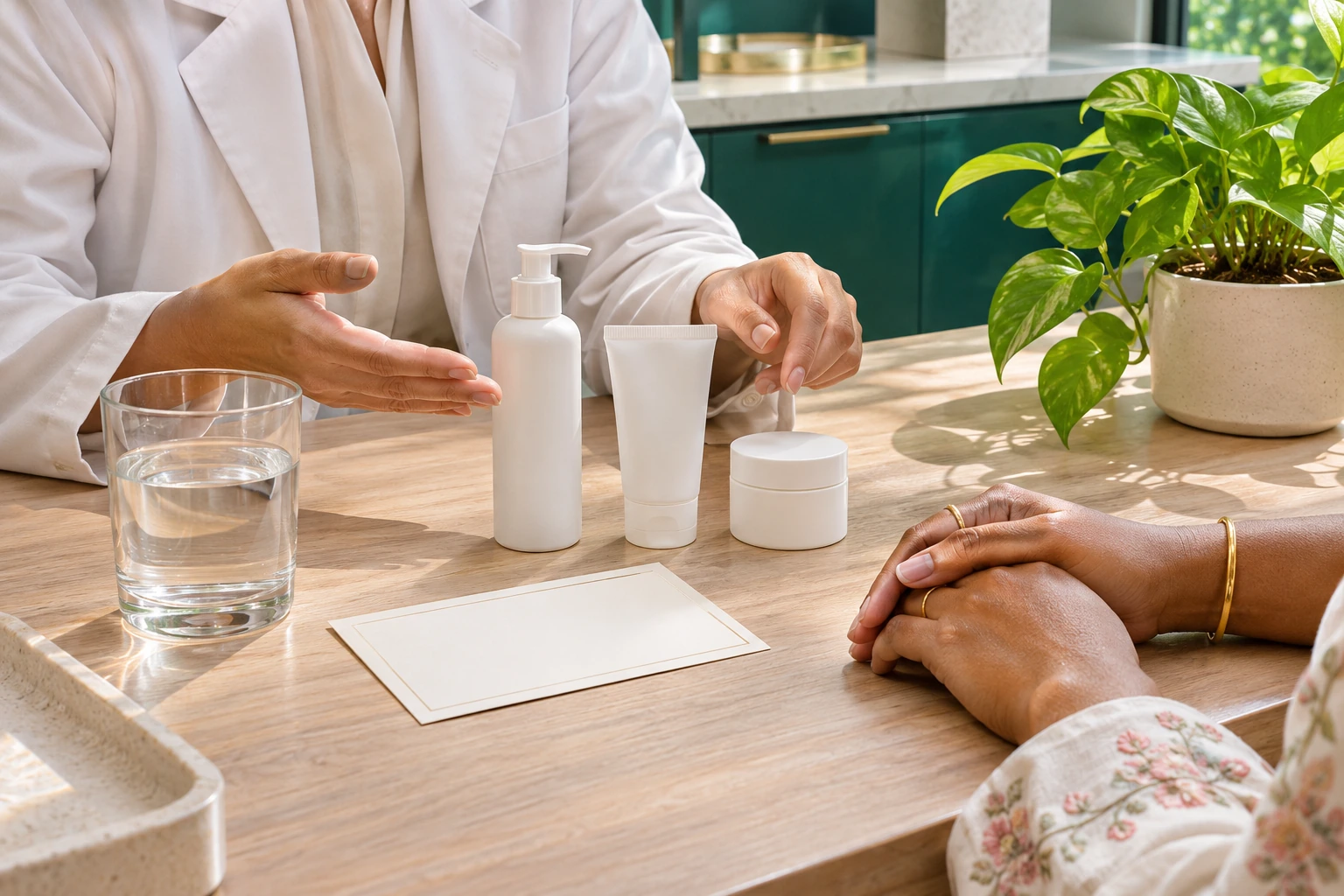
Improvement is part of an ongoing plan. Daily protection and follow-up still matter when patches look lighter.
First, check what the patches are
Melasma often appears as darker patches on the cheeks, forehead, nose or upper lip, commonly on both sides of the face. Other conditions can also cause uneven colour. A doctor needs to check the cause before recommending care.
Melasma itself does not usually itch or hurt. Mention any pain, itching or other changes, rather than assuming that every dark patch is melasma.
Why patches can become darker again
Sunlight can stimulate pigment production and darken melasma. Visible light can also play a part, especially in darker skin tones. Hormonal changes, including pregnancy, and some medicines can be triggers.
Even when patches improve, these triggers may still be present. Melasma can last for years, and improvement can take months. A return of colour is a reason to review the plan with your doctor. Do not stop prescribed medicines or contraception on your own.
Make daily protection practical
Use broad-spectrum, water-resistant sunscreen with SPF 30 or higher, alongside shade and a wide-brimmed hat outdoors. Reapply as directed, particularly during time outside. Think about the parts of your routine when you are exposed to daylight.
A tinted sunscreen containing iron oxide may help protect against visible light. Ask which option suits your skin. Gentle, fragrance-free products can also be useful: burning or stinging can indicate irritation, which may make pigmentation darker.
Where treatment fits
A plan often combines sun protection with prescribed creams. A procedure is considered only after assessing the diagnosis, skin tone, triggers and response to care. It is not an automatic next step.
Discuss irritation, pigment changes and other risks before agreeing to treatment. Tell the doctor if you are pregnant, breastfeeding or planning pregnancy, because this can change the options. See the pigmentation treatment information for suitability, recovery, possible side effects and general costs.
What to ask at your review
- What makes you think this is melasma rather than another cause?
- Which triggers should we discuss in my daily routine?
- How should I use my products, and what should I do if they irritate?
- When should we review progress, and what ongoing care might I need?
Bring your skincare products or clear photos of their labels. Tell the doctor what you have already tried and how your skin responded. This makes the discussion more useful than choosing a treatment by its name alone.
Sources & further reading
Background reading from the American Academy of Dermatology. These general guides support understanding; your own care needs a doctor’s assessment.