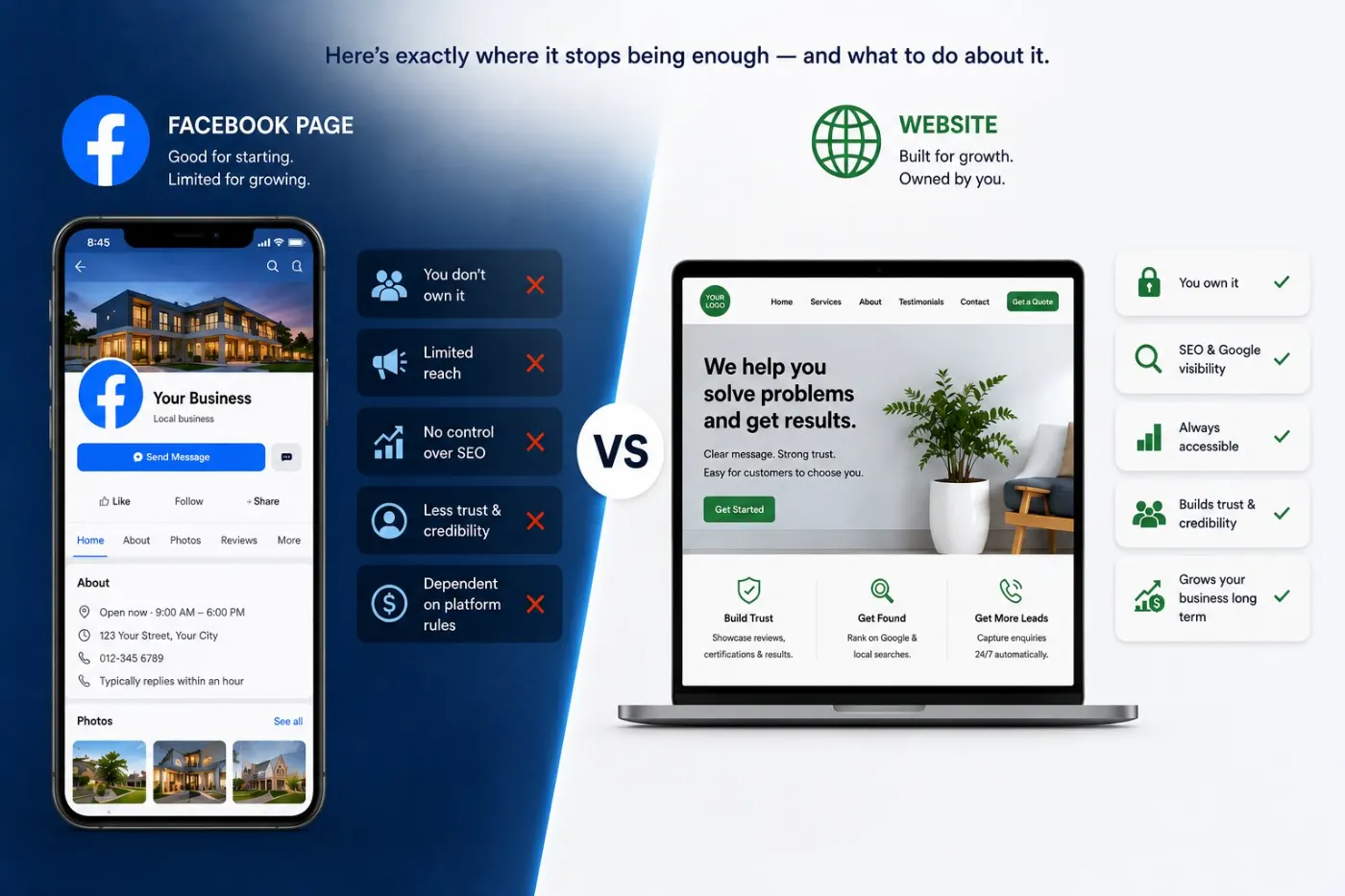
They’re not competing — they’re doing different jobs
A Facebook page is really good at some things: it is free, quick to update, and reaches people who already follow you. For a business with repeat customers and referrals, that can work for a long time.
The problem starts when the question changes from “how do I keep in touch with people who know me?” to “how does a stranger find and check me?”. A page does the first well. It does the second badly — and you can’t fix that, because that is how Facebook pages work.
This guide explains it honestly: what a page is good at, what only a website can do, and when most small businesses start to feel the difference.
What a Facebook page genuinely does well
Reach inside a network you didn’t have to build
Post once and it can reach all your followers, plus anyone they share it with. No other free tool reaches so many interested people so quickly.
Speed — a post takes two minutes
A closing notice, new stock, a photo from today: nothing is faster than a page for sharing news right now.
Being reachable in a chat window
Many customers prefer to message rather than call or fill in a form, and Messenger is already on their phone. That is a real advantage.
Six things only a website does
Facebook is not doing these badly on purpose. A page was simply never built for them.
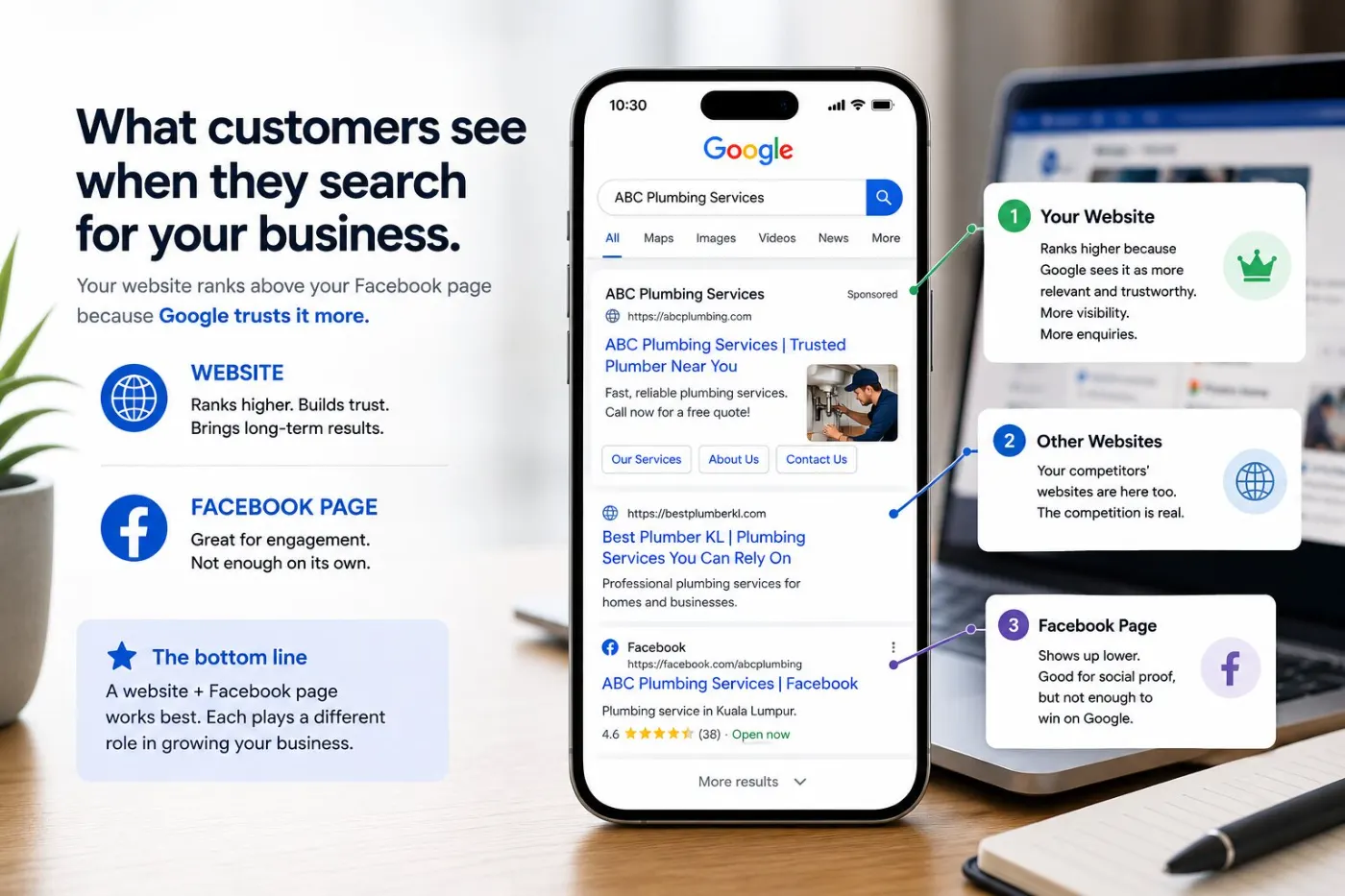
Rank on Google for what you do
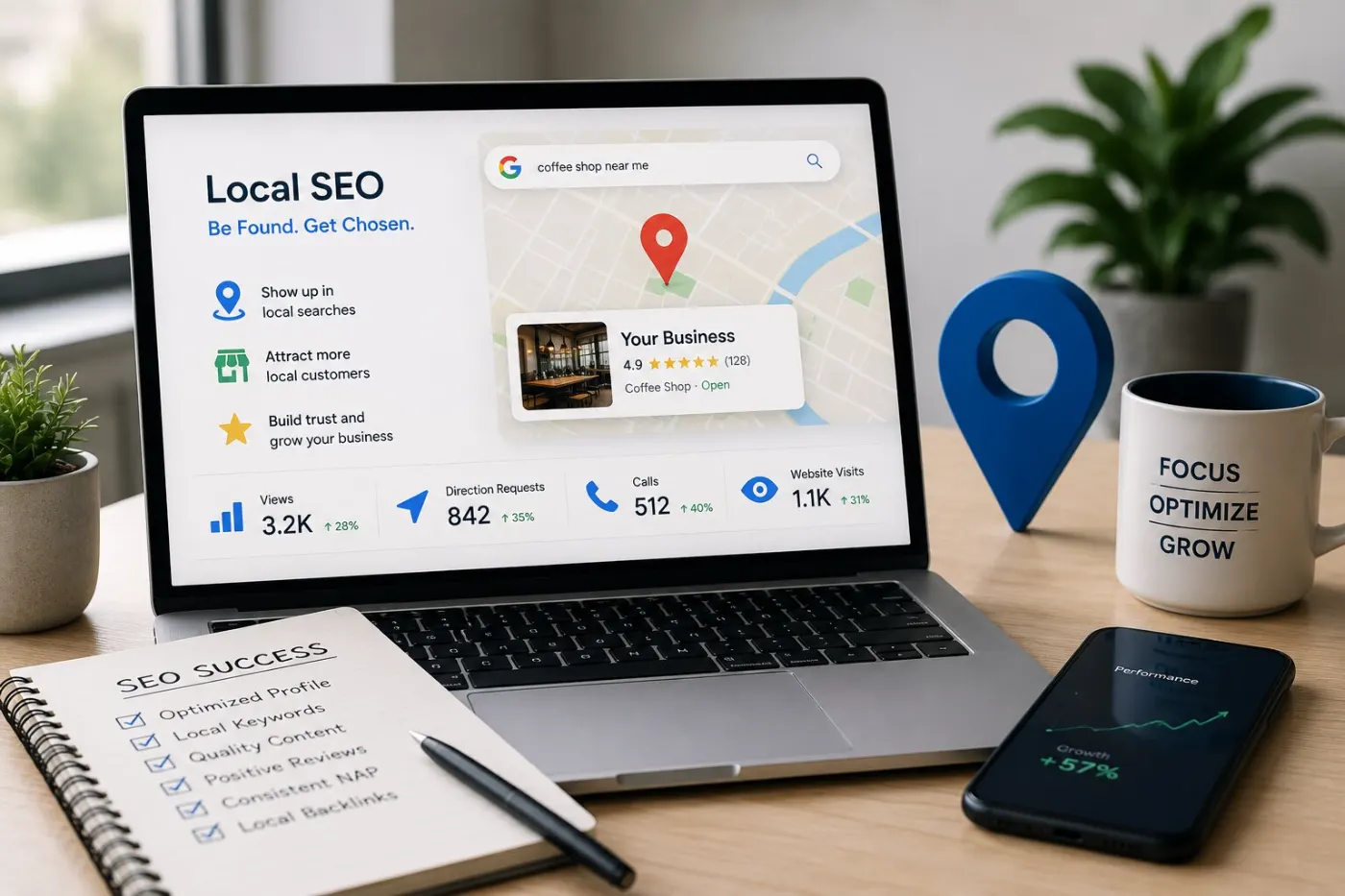
Search “plumber near me” and you will see websites, not Facebook pages, in Google Maps and the results below. Google knows about Facebook pages, but they almost never show up for real searches — they have no service pages, no location details, nothing Google looks for in local search.
Load for anyone, with no account and no app
Many visitors — people without the app, logged out, or not on Facebook — see a login screen or a limited page instead of your content. A website opens for everyone, every time.
Look like a business that will still be here next year
Fair or not, a business with only a Facebook page looks smaller and less established than one with a proper website — especially to a customer comparing quotes, or about to pay a deposit for a big job.
Take a proper enquiry, not just a comment
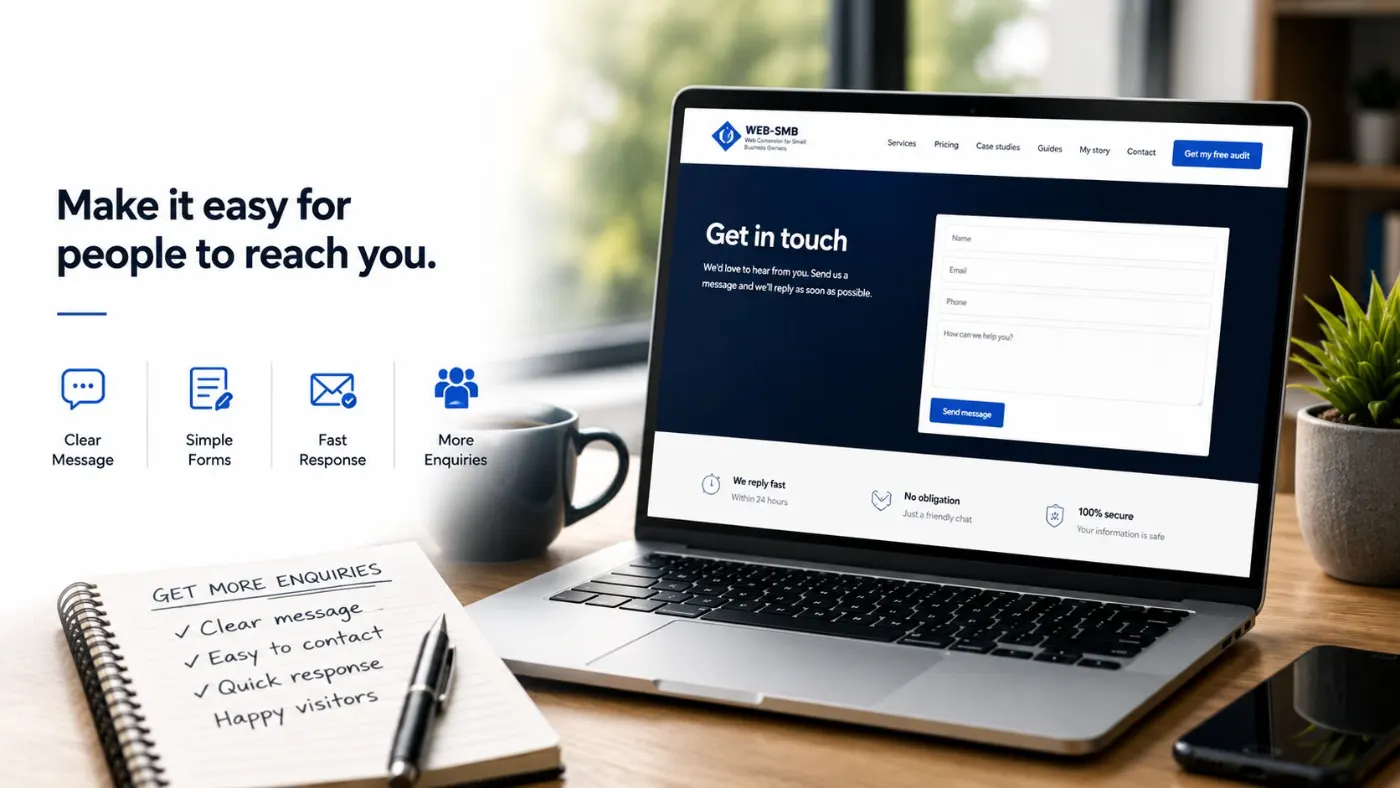
A contact form that asks two or three right questions saves you both from many “so what do you need?” messages. And it doesn’t get lost under other comments like a Facebook reply can.
Give you data and tracking you actually own
A website has its own tracking, so you can see what works. Facebook’s page insights are useful, but they are Facebook’s numbers, only about Facebook.
Stay put no matter what the platform changes
Pages can be restricted, reach fewer people after a Facebook change, or even be removed over a problem you can’t quickly fix. A website is the one part of your online presence nobody else can turn off.
Halfway point
Wondering if your page alone is costing you jobs?
Send me your Facebook page or website link. The free audit checks how you really show up on Google and tells you exactly what is missing — free, within 48 hours.
Rather just ask? WhatsApp me a quick question → No form, no sales call.
Side by side
So when is a page alone actually fine?
Honestly: a one-person business with repeat customers and referrals, where almost everyone already has your number or heard your name from someone they trust. Word of mouth doesn’t need Google — it needs a way to show you are still open and reply quickly, and a page does both.
The signal to watch for is the moment a stranger enters the picture — someone with no personal referral, comparing you against other options with no relationship to lean on. That’s the exact moment a page stops being enough, because a page was never built to win a stranger’s trust from a cold start.
Four signs you’ve outgrown a page-only presence
You’re being asked “do you have a website?”
If it’s come up more than once, it’s already cost you more than once.
You’re quoting bigger jobs, or a higher price point
The bigger the decision, the more a customer checks you before buying — and the riskier a page-only business looks.
Competitors with real sites are outranking you
If the businesses above you on Google all have websites and none use only a page, that is not luck — that is how Google works.
You’re thinking about running ads
Ads that send people to a Facebook page instead of a proper web page get fewer enquiries — you pay to lose people at the last step.
The good news: it’s not either-or
You don’t need to close your page. The two work best together, each doing what it is good at:
- Put your website link at the top of your Facebook page, and your Facebook link at the bottom of your website. Visitors should be able to move between the two in one click.
- Use exactly the same business name, address and phone number on both — any difference reduces trust, and it is easy to avoid.
- Use the page for what it does fast: daily updates, quick replies, photos from today’s job. Use the website for what it is built for: explaining your service, showing proof, and the contact form.
- Post on the page, link to the website. When you announce a new service, the Facebook post should send people to the service page on your website, not explain everything in one post.
A small, fast website doesn’t have to be a big project. A homepage, one page for each service, and a working contact form is all most small businesses need — see what a website should actually cost if that’s the part holding you back.
Quick check: is a Facebook page enough for you?
5 questions · 30 secondsOpen your website on your phone, then answer honestly.
Questions owners ask
Do I need a website if I already have a Facebook page?
Yes, once people start searching Google for what you sell instead of scrolling Facebook. A page reaches people already on Facebook. A website shows up on Google and belongs to you.
What can a website do that a Facebook page can’t?
Rank on Google, open without a login, look good when shared, have a proper enquiry form, give you your own tracking, and stay safe no matter what Facebook changes.
Is a Facebook page enough for a very small business?
For a one-person business with word of mouth and repeat customers, a page can be enough for a while. Once strangers start checking you before calling, you start losing jobs.
Will people find my business on Google with only a Facebook page?
Rarely for popular searches. Google knows about pages, but they almost never rank above a real website, and they can’t have the service pages Google looks for in local search.
Can I just use my Facebook page as my website?
You can link it as your only website, but it can’t replace one — people need an account to see it fully, Facebook can restrict or remove it, and it can’t rank like a website.
What’s the cheapest way to run both?
Keep the page for updates and quick replies, and add a small, fast website — a homepage, one page for each service, and a contact form. Link the two and keep the details the same.