
SEO is not one job. It is nine, and five of them are yours
SEO feels hard because it is sold as one mysterious service. It is not. It is nine separate jobs, and they are very different — some take ten minutes of typing, some need a technical expert.
When you see them listed, one thing is clear: the jobs that help a local business most are the free ones, and nobody can do them for you. Your Google listing, your reviews, your page titles, and using the same phone number everywhere. An agency can remind you about these. It can’t do them for you.
And the jobs worth paying for are mostly one-time, not monthly. Knowing this can save you more money than anything else on this site.
The nine pieces, and who does them
Top to bottom by effect| The piece of work | Who | Why that answer |
|---|---|---|
| Your Google Business Profile | You · free | This matters most for showing up locally, and it is not on your website. Fill in categories, hours, service area and photos. Full guide here. |
| Reviews | You · free | Only your customers can write them, and only you can ask. No agency can create real reviews for you. How to ask without it being awkward. |
| One page per service, named properly | Paid · one-off | One “Services” page listing eight things won’t rank for any of them. Giving each service its own page is the most valuable paid work, and you only do it once. |
| Page titles and descriptions | You · free | The blue line people click on Google. You know how customers describe your work better than any writer — and it is just one line per page. |
| Can Google crawl the site at all | Paid · one-off | Blocked pages, a hidden setting that tells Google to ignore a page, or a missing sitemap. Rare and hard to see, but very harmful — worth one proper check, not a monthly fee. |
| Mobile speed | Paid · one-off | A slow site loses visitors, but a very fast site doesn’t win you extra. Fix it once, then stop worrying about it. The five real causes. |
| Consistent name, address and phone | You · free | Your name, address and phone number must be the same on your site, your Google listing and everywhere else. If they don’t match, Google is less sure where you are. |
| Pages that answer real questions | Shared | You share what customers really ask; a writer turns it into pages. This is worth paying for now and then — not every week. |
| Being mentioned elsewhere | You · free | Your industry association, your suppliers, a local business group, or a real news mention. Earned through your real business, never bought. |
Count the You · free entries: five of the nine cost nothing and need no agency. Three are one-off paid jobs. One is occasional. Nothing on this list justifies an open-ended monthly retainer for a small local business.
Start with the two nobody can do for you
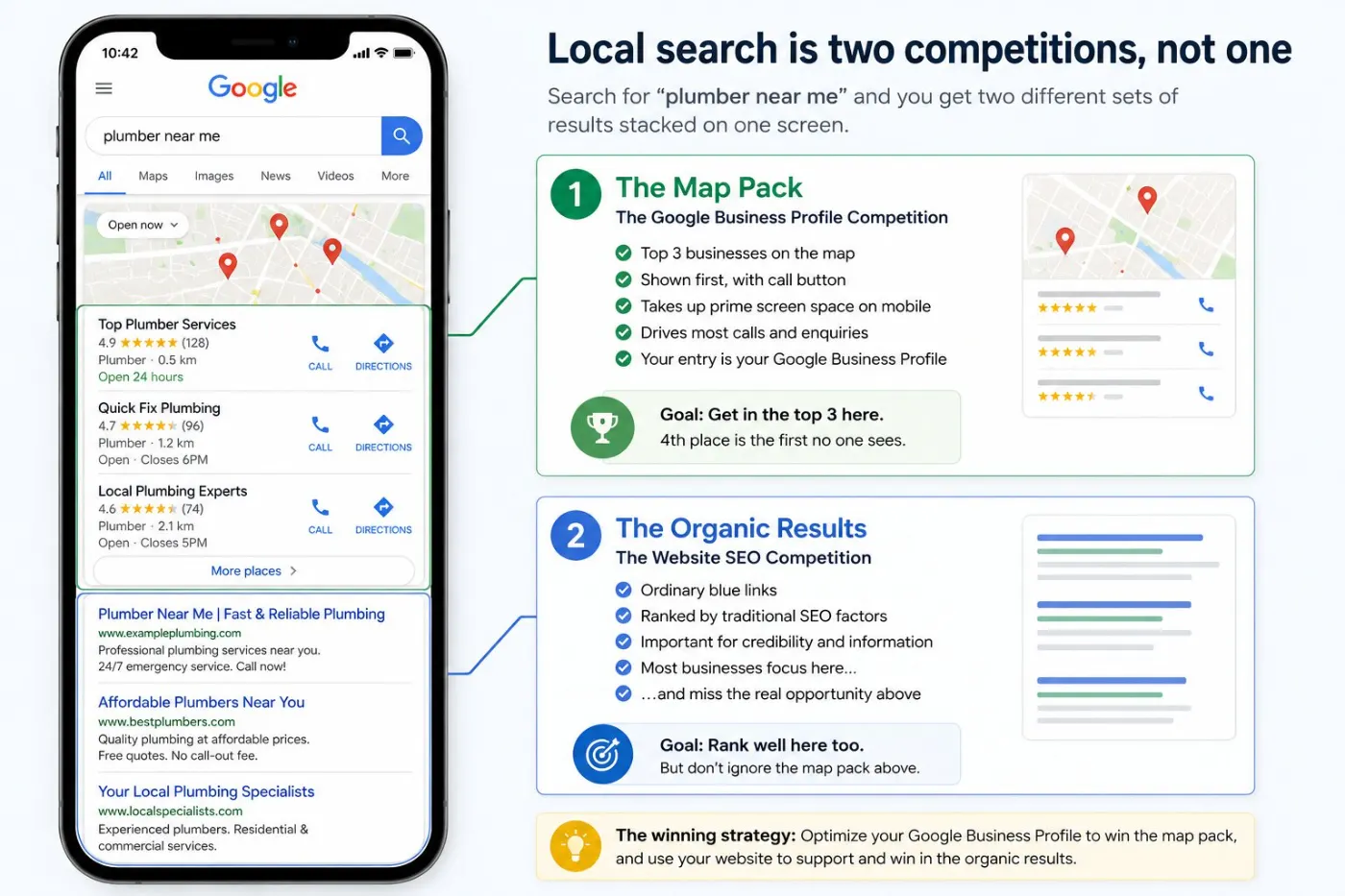
If you only follow one part of this page, make it this one. Claim and finish your Google Business Profile, then start asking every customer for a review. For a local business, these two help you show up more than the other seven together.
These are also the two that owners skip, because they don’t feel like SEO. Filling in opening hours doesn’t feel like marketing. Sending a customer a link doesn’t feel like a plan. But when three businesses show on the Google Map, these two things mostly decide the order — and which one people tap.
Do them properly before you pay anyone for anything. If you haven’t set up your own Google listing, paying an agency to work on your website is wasting money.
What paying for it should actually look like
Three of the nine genuinely need someone who does this for a living. The problem is not paying for them — it is the shape of what gets sold. You will not be able to judge the technical work itself, so judge the five things you can judge: how it is framed, what changes, what is being targeted, who holds the accounts, and what is promised.
Each one shows a good answer and an answer that should make you walk away. You will spot both within ten minutes of a first call.

If you only ask one question, ask this
“In plain words, what will be different on my website in eight weeks?” A good answer is a short list of pages and fixes. A bad answer is a long speech about strategy and algorithms — and you will know which one you got.
Quick check: have you done the free SEO jobs?
5 questions · 30 secondsOpen your website on your phone, then answer honestly.
Eight things you can stop worrying about
Half of what owners hear about SEO is either ten years out of date or was never true. You can safely ignore all of this:
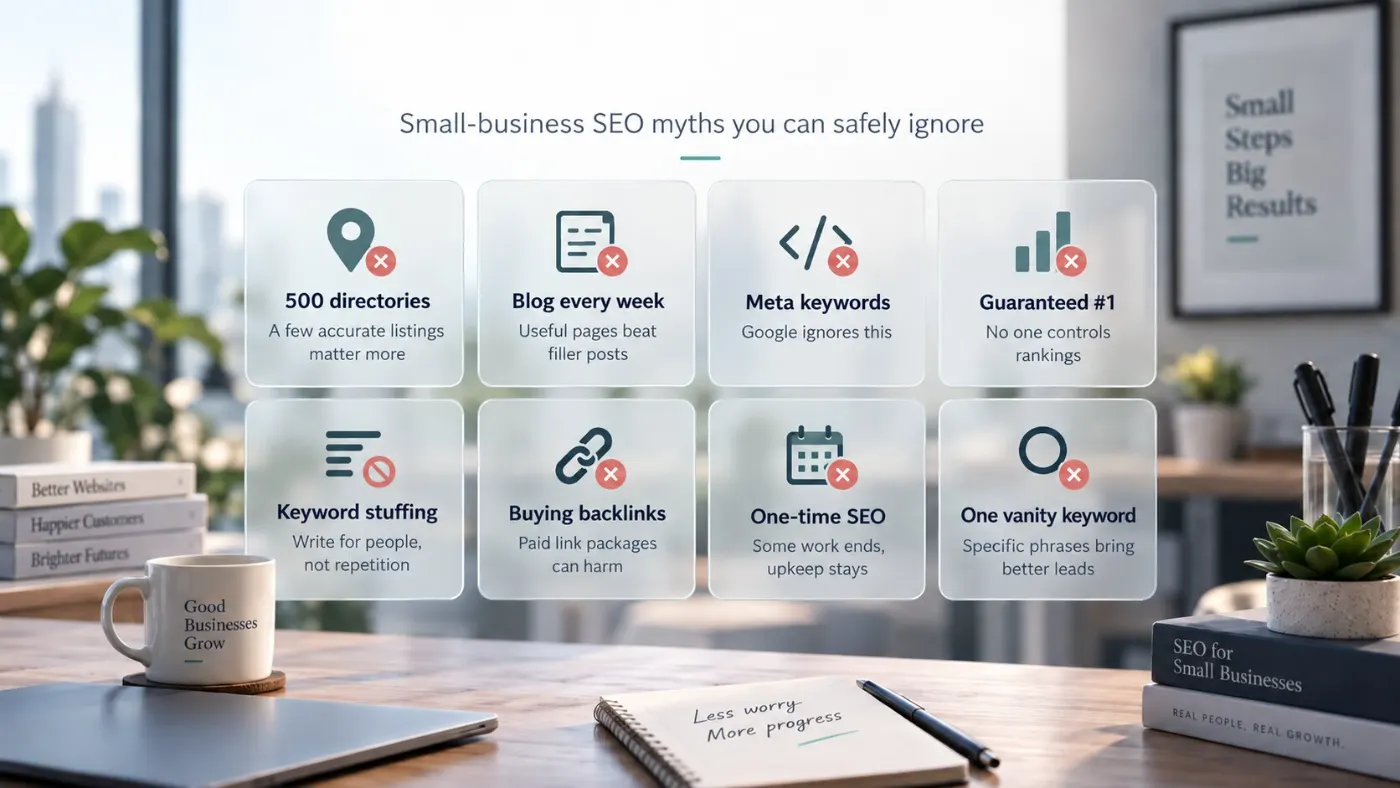
“Submit your site to 500 directories”
This stopped working years ago. Now it mostly creates listings with wrong phone numbers. A few listings that matter in your industry are better than 500 useless ones.
“You need to blog every week”
A blog written just to post something creates pages nobody searches for. One good page for each service, plus an answer to a real customer question now and then, works better than a year of filler. More in does a small business need a blog.
Meta keywords
Google has ignored this for more than ten years. If someone charges you to fill it in, that tells you a lot about the rest of their work.
“We’ll put you at the top of Google”
Nobody can promise a position. Cold callers who claim a Google partnership, a guaranteed number one, or an urgent problem with your listing are the easiest way to waste money.
Keyword stuffing
Repeating “aircon service Johor Bahru” eleven times makes the page worse to read and doesn’t help your ranking. Write the way you would talk to a customer.
Buying backlinks
Buying links is against Google’s rules and can hurt you. Only links you earn through your real business — suppliers, associations, local news — are worth having.
“SEO is a one-time job”
The opposite mistake. The paid technical work ends, but getting reviews and keeping your details correct never ends. Those are the free parts — which is why people forget them.
Obsessing over one vanity keyword
Owners focus on one big search phrase and forget the twenty small ones that really bring enquiries. Being third for “roof repair Skudai” is worth more than first for “roofing Malaysia”.
The order to do it in
You don’t need to do it all at once. The free work comes first on purpose — it helps the most, and it shows you if you need to pay for anything at all.
This week
Free · yours
Claim your Google Business Profile. Ask ten customers for a review.
Fill in your listing properly — categories, hours, service area, photos — then ask your last ten happy customers for a review. This helps more than anything else on this page, and takes one afternoon.
This month
Free · yours
Fix your page titles. Check your details match everywhere.
Read your page titles and rewrite any that don’t mention the service and the town. Then check your business name, address and phone number are the same on your site, your Google listing, and everywhere else.
Then, once
Paid · has an end
Crawlability, mobile speed, one page per service.
Only after the free work is really done. This is the paid part. It is a clear project with an end. Anyone selling it as a permanent monthly cost is selling you something else.
From then on
~10 min a month
Keep asking for reviews. Keep your details current.
Add a page when customers keep asking the same question. That is the only ongoing job — no monthly fee needed, and it keeps helping over time.
But being found is only half the job. Once people arrive, the site still has to turn them into enquiries — and that is a different problem with different answers.
Questions owners ask
Can I do SEO myself?
Yes, most of what helps you locally — your listing, your reviews, your titles, your details. What needs paid help is making sure Google can read your site, phone speed and proper service pages. Nobody can do the first group for you, and you shouldn’t do the second yourself.
How much should it cost?
Judge by the work being done, not the monthly price. For a small local business, most of the value is one-time work with an end. If you can’t name what changed on your site last month, you are paying for nothing.
How long does it take to work?
Work on your profile and reviews can change Google Map results in weeks. Work on pages and content takes two to four months. Anyone promising page one in 30 days is targeting words nobody searches. How long SEO really takes.
Do I need to blog every week?
No. One good page for each service, plus a page now and then answering real customer questions. Five useful pages are better than fifty filler posts, and much cheaper to look after.
Someone called offering me number one on Google.
Hang up. Nobody controls Google’s ranking, so nobody can guarantee a position. The only honest version is paid ads, and those are clearly labelled.
What is the one thing to do first?
Set up and complete your Google Business Profile, then start asking for reviews. These two help more than everything else on this page together, cost nothing, and need no agency.